

Why is Chlorination Superior to Thermal Shock Disinfection?
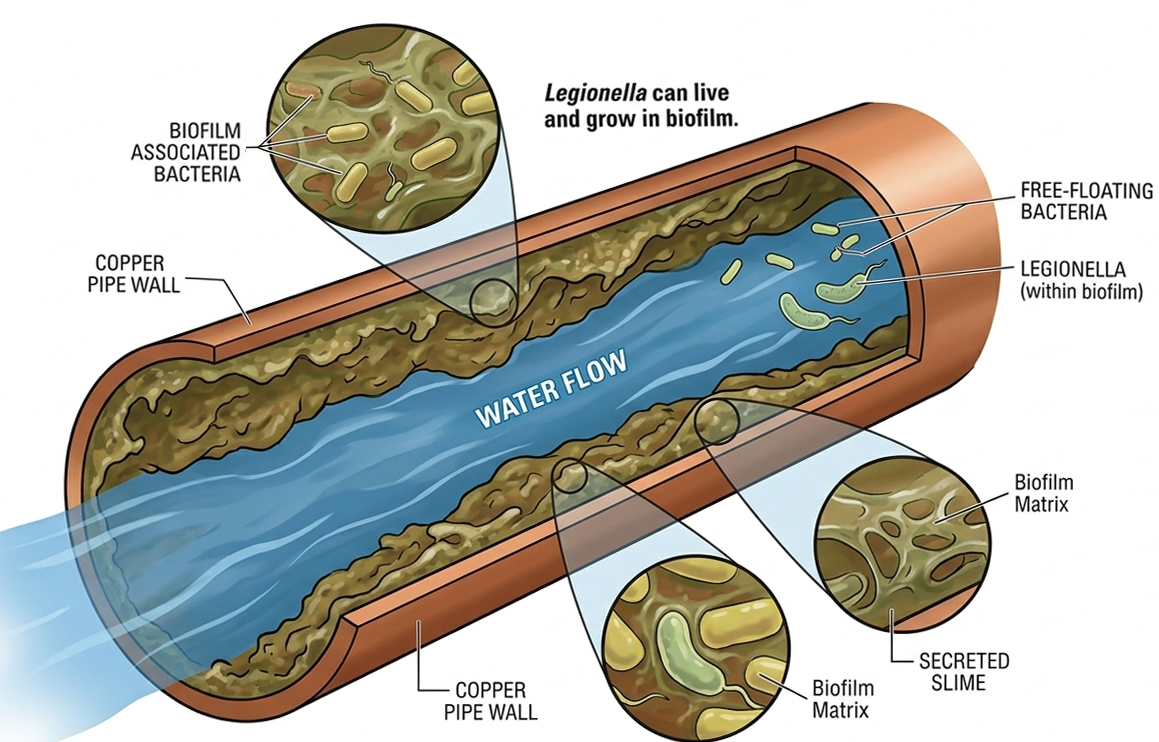
When managing Legionella risks in warm water plumbing systems, both chlorination and thermal shock disinfection are commonly used treatment methods. However, chlorination is widely regarded as the more effective and reliable long-term solution for controlling Legionella bacteria within complex water systems.
Thermal shock disinfection works by raising the water temperature to a level intended to kill bacteria. Thermal shock requires temperatures above 70 degrees Celsius at the tap or outlet which can cause third degree burns to the skin in less than 1 second. While this method can temporarily reduce Legionella levels, it often struggles to fully eliminate bacteria hidden deep within pipework, biofilm, and low-flow sections of plumbing systems. In many commercial and industrial systems, maintaining the required temperatures consistently throughout the entire network can not only be difficult, but also dangerous due to the high temperature of the water required to achieve thermal shock.
Chlorination, particularly sodium hypochlorite treatment, provides a more thorough system-wide disinfection process. By circulating disinfectant through the plumbing infrastructure, chlorination can penetrate areas that heat alone may not effectively reach.
The Problem with Biofilm
One of the biggest challenges in Legionella control is biofilm.
Biofilm is a slimy protective layer of microorganisms that forms on the inside of pipes, valves, tanks, and fixtures. Once established, biofilm creates an ideal environment for Legionella bacteria to survive and multiply while protecting them from temperature fluctuations and standard cleaning methods.
Thermal shock treatments may reduce bacteria in the flowing water but often fail to completely remove bacteria embedded within biofilm layers.
Chlorination is more effective because it helps break down and penetrate biofilm, allowing disinfectant to directly target bacterial growth throughout the water system.
Benefits of Chlorination Over Thermal Shock
More Effective Penetration
Chlorinated water can circulate throughout the entire plumbing system, low-flow areas, and complex pipework where bacteria commonly develop.
Improved Biofilm Control
Sodium hypochlorite treatment assists in breaking down biofilm, reducing the protective environment Legionella bacteria rely on.
Consistent System-Wide Treatment
Unlike thermal shock methods, chlorination does not rely solely on maintaining extremely high water temperatures throughout the system.
Reduced Risk of Recontamination
Because chlorination provides a more complete disinfection process, the likelihood of rapid bacterial regrowth is reduced when combined with proper flushing and system maintenance.
Supports System Recommissioning
After treatment, plumbing systems can be flushed, tested, and safely returned to service in accordance with NSW health and compliance requirements.
Why Professional Treatment Matters
Effective Legionella treatment requires more than simply increasing water temperature or adding disinfectant. Every plumbing system is different and requires proper risk assessment, controlled dosing, flushing procedures, and ongoing monitoring.
East Coast Legionella Treatment Specialist provide professional chlorination services across the Central Coast and Newcastle, helping businesses and facility managers reduce Legionella risks and maintain compliant water systems.
Protect Your Water System
If your facility has experienced stagnant water, inconsistent temperatures, or elevated Legionella risks, professional chlorination treatment can provide a safer and more effective solution than thermal shock disinfection alone.
Contact our team today to discuss a customised Legionella treatment and water system management plan.